x

California Monarch and Pollinator Habitat Kits

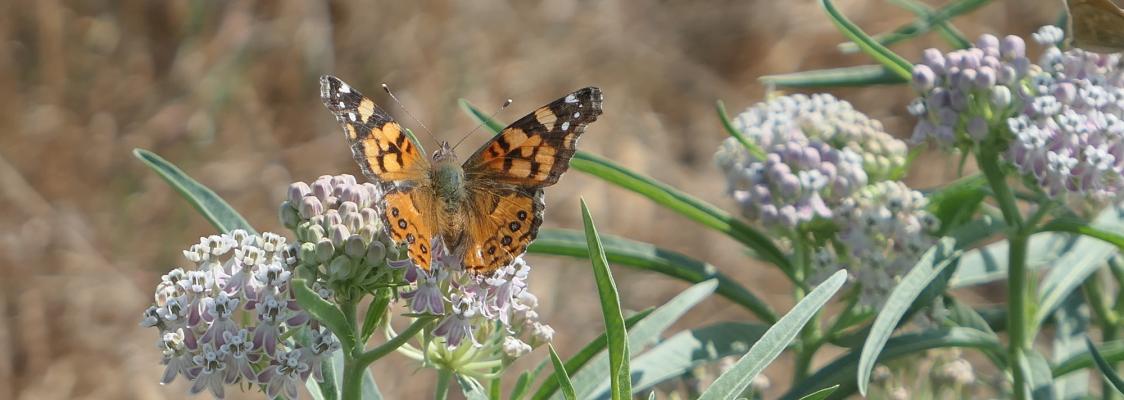
A west coast lady butterfly on narrowleaf milkweed flower.
West coast lady butterfly on narrowleaf milkweed (Xerces Society / Angela Laws).

Many pollinating insects are declining in California, including bees and butterflies. The population of western monarch butterflies has declined 95% since the 1980s, due to a variety of reasons, including habitat loss and degradation, pesticides, and climate change. One important step we can take to protect these important animals is to increase the amount of habitat available to these species. The Xerces Habitat Kit Program provides climate-smart native plants to project partners who are willing to provide the time, labor, and land to develop pollinator habitats. Xerces’ California habitat kits have had a tremendous impact- we have provided almost 300,000 plants to partners and pollinators across California. We are excited to continue this work! 


If you would like to be notified when we start accepting project proposals for our annual CA Habitat Kit program, please fill out this form, and we will add you to our contact list. Our application period usually runs from February to April each year. To learn more about the California Habitat Kit program, please watch this informational video. A link to the proposal form is located in the “Proposal Form” section below. 

Información sobre el programa de kits en español


Note: This habitat kit program serves non-residential projects. If you are interested in having a project supported by The Xerces Society Habitat Kit Program in Southern California and plan to incorporate native plants into your home garden, please visit the Southern California Residential Habitat Kits webpage.


Learn more

Qualifying Projects

Kits are intended to be used to create or enhance monarch and pollinator habitat on working lands, public lands, tribal lands, and private/non-working lands recovering from wildfires, with landowner or land manager collaboration. This includes farms, ranches, tribal land, post-wildfire recovery areas, urban farms or gardens, city parks, school gardens, or other public areas. The kits are not intended for use in home gardens.  

We encourage stewards of working lands to partner with organizations or entities that can provide additional technical support for their projects, such as Resource Conservation Districts (RCDs), the Natural Resources Conservation Service (NRCS), or other conservation organizations.

If you have questions about your project’s suitability or requests for technical guidance on your project, please email us at centralvalleypollinators@xerces.org.


Qualifying Locations
We have kits available for the Sacramento Valley, San Joaquin Valley, Sierra Nevada Foothills, Central Coast and Coastal Foothills, and Southern California regions. Please enter your address in the map below to determine which kits are available for your location. 

If you do not see your region listed, we do not have kits suitable for your region.


Timeline
This is an overview of the entire habitat kit process from project proposal to final report. For more information about each step, please read the sections below. 
 

Date(s)

Task

Feb 9  to April 10

Submit a Proposal Form

early May

Notification of selection via email

Mid-May

Sign the Project Partner Collaborative Agreement

Late-May

Invitation to Mighty Networks to connect with other kit recipients

Summer - fall

Site preparation

Oct 21 - 23

Kit distribution at Our City Forest in San Jose, CA

Oct 28 - 30

Kit distribution at USDA Plant Materials Center in Lockeford, CA

Dec 2

Kit distribution at Audubon Center at Deb’s Park in Los Angeles, CA

Dec 4

Kit distribution at Native West Nursery in San Diego, CA

Due Jan 1, 2027

Plant your kit and submit a Planting Notification Form (PNF)

Due June 30, 2027

Submit a Final Report

Proposals for the 2026 habitat kit season will be open from Feb 9, 2026, through April 10, 2026.

We have a standardized ranking process that assesses site readiness and maintenance, pesticide risk, community need, and outreach opportunities.  The project proposal helps us determine which projects are likely to be successful. Strong proposals will include detailed responses to the questions. Please reach out to us if you need help with the project proposal form.  If you need technical guidance for your project, please reach out as early as possible, so we can provide you with assistance.
 

Proposal Form Outline

  • General Information - the first section asks for general information about you and your project, including contact info, project location and project name.
    • Kit Region - please see the interactive map in the “qualifying projects and locations” section if you are unsure which region you are in.
    • Kit types - you’ll be asked to specify which kits you would like and the number of each. Please see the “available kits” section for details about the different kits available.
  • Habitat Project Plan - the next section asks for information on how the kit will be used and how the project will be implemented. This section asks for information on the following:
    • Description of planting location
    • Space available for planting in square feet 
    • Current conditions at the planting site
    • Site preparation plan
    • Irrigation plans
    • Long-term maintenance
  • Protection from Pesticides - this section helps us to evaluate the pesticide risk at the site.  Use of pesticides does not automatically disqualify your project. Contact us if you need assistance with mitigating pesticide risk at your site. This section asks for information such as:
    • Distance between your planting site and nearest pesticide use.
    • Description of pesticides used (including organic pesticides), application practices, and timing.
    • Pesticide risk mitigation strategies used at the site.
  • Outreach, Education, and Community Science - this section asks about potential outreach or education that will occur at the planting site (if any). For school projects, this is a good place to describe if/how the habitat kit will be incorporated into lesson plans.
     

Submit a Proposal

We have a number of different types of kits available. Please click on the links below to learn about each of the kit types, and the regions where they are available.

All kits are comprised of native plants that have been identified as having high value to monarchs and other pollinators and are grown without the use of systemic pesticides that may be harmful to pollinators. You may request multiple kits if needed for your project. 
 

Hedgerow and Riparian Hedgerow Kits: There are a total of 90 plants in each kit, which will cover approximately 540 linear ft/ 5,400 ft2 if planted on 6 ft spacing. Hedgerow and Riparian Hedgerow kits are perfect for creating diverse habitat in larger areas, such as farms, ranches or natural areas. These kits contain both woody and herbaceous seedlings  including flowering shrubs and perennials, milkweed and native bunch grasses. Riparian Hedgerow kits are intended for use near ponds, streams, rivers or in wetter places, while the regular Hedgerow kits are better for upland locations. Below are the specific plants lists for each regional hedgerow kit: 


Garden Kits - There are a total of 36 plants in each kit, which will cover approximately 576 ft2 when planted on 4 ft spacing. Garden kits are perfect for smaller spaces such as urban farms, gardens, city parks or schools. These kits contain herbaceous plants, including milkweed, flowering perennials, and some bunch grasses. Below are the specific plants lists for each regional garden kit: 


Wildflower Grassland and Riparian Wildflower Kits: There are a total of 600 plants in each kit, which will cover approximately 5,400 ft2 if planted on 3 ft. spacing. Wildflower and riparian wildflower kits are perfect for creating grassland or meadow habitats in larger areas, such as rangelands or natural areas. These kits contain small herbaceous transplants (mostly ‘plugs’) including milkweed, flowering forbs, and some grasses.  Riparian wildflower kits are intended for use near ponds, streams, rivers or in wetter places, while the regular wildflower kits are better for upland locations. Please note that wildflower and riparian wildflower kits are not available for the Southern California region. Below are the specific plants lists for each regional wildflower kit: 


Monarch Overwintering Kits: There are a total of 36 plants in each kit, which will cover approximately 576 ft2 when planted on 4 ft spacing. Monarch overwintering kits are intended to be used in or near monarch overwintering sites along the coastline (see interactive map in ‘qualifying locations’ section), and in other coastal areas outside of the range of milkweed. These kits include  perennials, grasses, and shrubs. These kits will not contain milkweed and will focus on species that provide nectar year-round, especially in the winter. Overwintering kits are available for coastal areas along the Central Coast and Southern California. Below are the specific plants lists for each regional wildflower kit: 

To see mature habitat created with these kits, click on the “previous projects” button below.

Note: Plant species may be subject to change based on annual production and inventory. We do our best to work with our nursery partners to design habitat kits in advance and do not anticipate significant changes to kits. However, there are instances where nurseries may experience unexpected production issues for a particular species in a given year, and substitutions may be required.

Kits will be available for pick-up in October in most regions, and December in Southern California. More details regarding habitat kit distribution and locations will become available if/when your proposal is awarded a kit(s).

Distribution Locations

  • Martial Cottle Park, San Jose, CA
  • USDA Plant Materials Center, Lockeford, CA
  • Audubon Center at Deb’s Park, Los Angeles, CA
  • Native West Nursery, San Diego, CA.

Transportation Tips


Note: You must submit the Project Partner Collaborative Agreement before receiving your kit(s).

Reporting is critical to the work that Xerces does, and we cannot count the results of your planting if you do not complete the required reporting. This reporting helps us to show funders that the habitat kits result in real habitat and it helps us to continue offering the kits. The information provided also helps Xerces update and improve the science-based conservation resources we offer through our website, training courses, and webinars.

Planting Notification Form
This report confirms the planting at the project site with photo proof. 
Please submit your Planting Notification Form (PNF) byJanuary 1, 2027.

Final Report
This report provides more information on the establishment of the plants. 
Please submit your Final Report by June 30, 2027.

Annual Photos
We will send you a form to submit an annual photo of your project in years 2-5 after planting. This is a requirement of one of the organizations funding the habitat kits, and helps to demonstrate that the habitat kits create lasting habitat.


Note: If awarded a kit, you will receive a project partner collaborative agreement that outlines all specific reporting requirements.

Xerces California Habitat Kit YouTube playlist:
Overview of Kit Types
Milkweed Seed Collection
The Value of Native Thistle
Webinar on Filling out Project Proposal Form


Additional Xerces California Habitat Kit Information
Keep an Eye Out for Pollinators in your Habitat
Winter Habitat for Pollinators
Xerces Community Science Programs


Pollinator Conservation Resource Center
Here you'll find region-specific collections of publications, native plant and seed suppliers, and other resources to aid in planning, establishing, restoring, and maintaining pollinator habitat—as well as materials to help you learn about the species of invertebrates and native plants you might encounter.


Other Resources:
Small Habitat Plantings In Urban Areas

Guidance to Protect Habitat from Pesticides

Coming soon!

Who should I contact if I have questions?
You can contact us at centralvalleypollinators@xerces.org with any questions about our California habitat kit program.
 

How do I participate in the Habitat Kit Program?
To participate, you must fill out a project proposal and be selected to receive a kit(s). Project proposals for California Monarch and Pollinator Habitat Kits will be available each year from mid-February to early April. We’re looking for projects that have been well thought-out and are likely to be successful. You are welcome to contact us for help with the project proposal form or for technical guidance on your project.  For tips on completing the project proposal, see this webinar.


What are the requirements of the habitat kit program?
Habitat kit recipients are required to (see Reporting Requirements, above):

  • Pick up their habitat kits at designated kit distribution sites
  • Fill out a planting notification form after planting your habitat kit
  • Submit a short final report 
  • Some projects will be asked to submit a photo once/year for 5 years. This is a reporting requirement for one of the funders of our habitat kits.

Can I get technical assistance for creating and maintaining my kit project?
Yes! We are happy to help. You may contact us at centralvalleypollinators@xerces.org with questions about your project and for advice on how to ensure that your project will be successful. We may be able to conduct a site visit and offer detailed conservation plans, especially for working lands projects.
We have created a planting guide for our California habitat kits. You can also find a variety of information and materials on our website, particularly in the Pollinator Conservation Resource Center.

How did you decide what plants to include in the kits?
The plant species included in the kits have been chosen based on monarch nectaring observations compiled from numerous sources, including published and technical reports, research datasets, and personal communications with monarch researchers, botanists, and other experts. Visitation data provides good general guidance on which plants are preferred by monarchs. Additional factors, such as availability, climate adaptiveness, regional and site suitability and general pollinator attractiveness, were also taken into consideration. We also include important host and nectar plants for other declining pollinators whenever possible. All plant species in the habitat kits are native to California.


Why are the kits available in the late fall/winter?
Fall through early winter is actually the best time to plant California native plants!  The winter rains help the plants to establish and the cooler temperatures reduce stress on newly planted seedlings.  The plants are ordered in advance from our partner nurseries so that they are well-rooted and ready to plant once you pick them up. Delaying planting can reduce the chances of your plant successfully establishing. 


I am receiving additional funds for my project through an NRCS Farm Bill Program and / or a CDFA grant. Can I still apply for a kit?
Yes, you can leverage other funding sources and apply for a kit. However, you must check in with your NRCS or CDFA contact to make sure you are still fulfilling your contractual obligations.

Are habitat kits organic?
Habitat kits are not certified organic, but we work with our partner nurseries to ensure that the plants are grown without the use of pesticides that are harmful to pollinators and other invertebrates. 

Can I get a habitat kit for my yard?
These kits are not intended for use in home gardens.  Currently, our California monarch and pollinator habitat kits are only available for use in public lands, working lands, tribal lands, or for fire recovery. However we do have a new residential habitat kit program for home gardens in Southern California.
 

Can I purchase a kit on my own?
The kits are not available for sale.


Can I have the kit delivered to me?
Kit delivery is not available. You must pick up your kit from one of our kit distribution locations (Lockeford, San Jose, Los Angeles, or San DiegoCA).


I do not live in California. Am I eligible for a kit?
While this particular habitat kit program is only for Californians, we do have habitat kit programs in other regions.

How can I support the Xerces habitat kit program?
The habitat kits are possible thanks to the generosity of Xerces Society donors and members.
Support the Xerces Society

You can contact us at centralvalleypollinators@xerces.org with any questions about our California habitat kit program.


Meet our California Habitat Kit Team

Jessa Kay Cruz - Xerces Society

Jessa Kay Cruz

Senior Pollinator Conservation Specialist
California and the Intermountain West


Angela Laws - Xerces Society

Angela Laws

Endangered Species Conservation Biologist
Climate Change Lead

Community-Building Opportunities

  • Mighty Networks (coming soon)
  • Habitat Kit Network Map (available in 2027)
  • Xerces Community Science Programs

Social Media
When posting about the Xerces Society Habitat Kit Program, you can help us spread the word about invertebrate and habitat conservation by including context about Xerces’ mission and our habitat kit program for any of your followers who don’t already know. Need some talking points? Click here for some key information to share about the Xerces Society Habitat Kit Program.

Please tag us in your posts so we can see your progress! Here are links to our social media pages: