
As a science-based organization, the Xerces Society produces dozens of publications annually, all of which employ the best available research to guide effective conservation efforts. Our publications range from guidelines for land managers, to brochures offering overviews of key concepts related to invertebrate conservation, from books about supporting pollinators in farmland, to region-specific plant lists. We hope that whatever you are seeking—whether it's guidance on making a home or community garden pollinator-friendly, advice on developing a local pesticide reduction strategy, or detailed information on restoring habitat—you will find it here!
Find Publications
Use the search functions to sort by publication type (books, guidelines, fact sheets, etc.), location, and/or subject (agriculture, gardens, pollinators, pesticides, etc.).
This insectary cover crop field trial was part of a larger project involving the design and implementation of specific insectary habitat features, such as field borders or cover crops, where we measured the diverse resource benefits of these features. Click the following links to read additional California habitat trial reports:
This field trial was part of a larger project which involved designing and implementing specific insectary habitat features, such as field borders or cover crops, and measuring some of the resource benefits of these features. Click the following links to read additional California habitat trial reports:
Information about the contents of and how to plant the California monarch and pollinator habitat kits
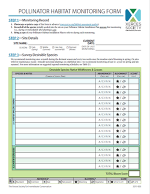
This form was designed to monitor wildflower diversity and longevity on a single site over time when used in conjunction with Maintaining Diverse Stands of Wildflowers Planted for Pollinators and the accompanying forms:
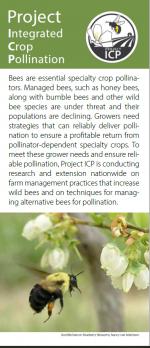
To see the full list of brochures available for download, click here.
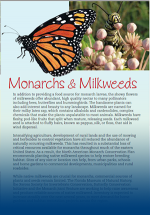
The Florida Museum of Natural History, in collaboration with the Xerces Society, the Butterfly Conservation Initiative, and the U.S. Forest Service, has produced three educational brochures that feature information about monarchs and milkweeds. One side of the brochure describes the plight of the monarch and encourages the planting of regionally appropriate milkweed species, while the second side showcases larvae of other butterfly species and their associated host plants.
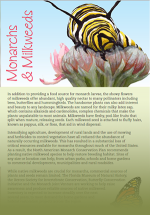
The Florida Museum of Natural History, in collaboration with the Xerces Society, the Butterfly Conservation Initiative, and the U.S. Forest Service, has produced three educational brochures that feature information about monarchs and milkweeds. One side of the brochure describes the plight of the monarch and encourages the planting of regionally appropriate milkweed species, while the second side showcases larvae of other butterfly species and their associated host plants.
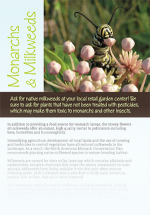
The Florida Museum of Natural History, in collaboration with the Xerces Society, the Butterfly Conservation Initiative, and the U.S. Forest Service, has produced three educational brochures that feature information about monarchs and milkweeds. One side of the brochure describes the plight of the monarch and encourages the planting of regionally appropriate milkweed species, while the second side showcases larvae of other butterfly species and their associated host plants.
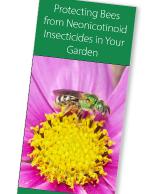
Neonicotinoids are a group of insecticides that are used widely on farms, as well as around our homes, schools, and city landscapes. This brochure explains why they are a risk to bees, gives examples of neonicotinoid garden products, and gives some simple tips for protecting bees from these insecticides
To see the full list of brochures available for download, click here.


