
As a science-based organization, the Xerces Society produces dozens of publications annually, all of which employ the best available research to guide effective conservation efforts. Our publications range from guidelines for land managers, to brochures offering overviews of key concepts related to invertebrate conservation, from books about supporting pollinators in farmland, to region-specific plant lists. We hope that whatever you are seeking—whether it's guidance on making a home or community garden pollinator-friendly, advice on developing a local pesticide reduction strategy, or detailed information on restoring habitat—you will find it here!
Find Publications
Use the search functions to sort by publication type (books, guidelines, fact sheets, etc.), location, and/or subject (agriculture, gardens, pollinators, pesticides, etc.).
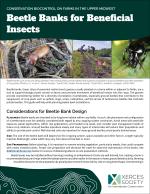
Conservation Biocontrol on Farms in the Upper Midwest
This fact sheet provides information on planning, locating, and installing beetle banks in the Upper Midwest, including recommended grasses and flowers that can be planted. Beetle banks are linear strips of perennial native bunch grasses that provide overwintering shelter for predatory ground beetles, spiders, and other beneficial invertebrates.
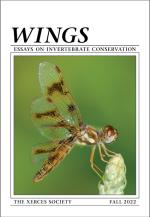
Essays on Invertebrate Conservation
Understanding the natural history of the species we work with is the foundation of our efforts to protect invertebrates and their habitats. We at Xerces are completely enthralled by the amazing behaviors, intriguing relationships, and eye-catching beauty of these animals. This issue of Wings features bees, butterflies and wasps, and dragonflies. We hope you find them as entrancing as we do.
Northern Great Plains Edition
This guide is intended as a portable, accessible guide for recognizing common, and nutritionally important, wildflowers and shrubs found on rangelands of the Northern Great Plains.
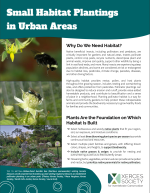
Native beneficial insects, including pollinators and predators, are critically important for gardens and natural areas.

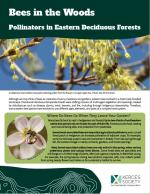
Pollinators in Eastern Deciduous Forests
Although we may think of bees as creatures of sunny meadows and gardens, eastern bees evolved in a historically forested landscape. Precolonial deciduous temperate forests were shifting mosaics of multi-aged vegetation and openings created by disturbances such as disease, storms, wind, beavers, and fire, including through Indigenous stewardship. Therefore, many eastern bee species have evolved to use different ages, elements, and parts of a complex forest system. Here, we outline the various habitat features that define the lives of these bees.
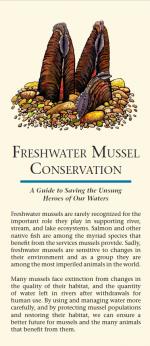
Freshwater mussels are rarely recognized for the important role they play in supporting river, stream, and lake ecosystems. Salmon and other native fish are among the myriad species that benefit from the services mussels provide. Sadly, freshwater mussels are sensitive to changes in their environment and as a group they are among the most imperiled animals in the world.
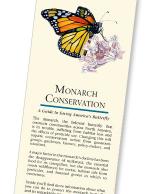
A Guide to Saving America’s Butterfly
This brochure contains information about how to enhance any landscape to help meet the seasonal needs of monarchs.
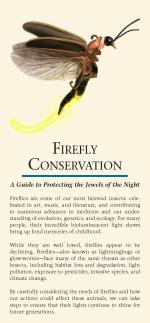
Fireflies are some of our most beloved insects: celebrated in art, music, and literature, and contributing to numerous advances in medicine and our understanding of evolution, genetics, and ecology. For many people, their incredible bioluminescent light shows bring up fond memories of childhood. By carefully considering the needs of fireflies and how our actions could affect these animals, we can take steps to ensure that their lights continue to shine for future generations.


