
As a science-based organization, the Xerces Society produces dozens of publications annually, all of which employ the best available research to guide effective conservation efforts. Our publications range from guidelines for land managers, to brochures offering overviews of key concepts related to invertebrate conservation, from books about supporting pollinators in farmland, to region-specific plant lists. We hope that whatever you are seeking—whether it's guidance on making a home or community garden pollinator-friendly, advice on developing a local pesticide reduction strategy, or detailed information on restoring habitat—you will find it here!
Find Publications
Use the search functions to sort by publication type (books, guidelines, fact sheets, etc.), location, and/or subject (agriculture, gardens, pollinators, pesticides, etc.).
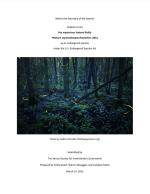
The Xerces Society submitted this petition for listing the mysterious lantern firefly (Photuris mysticalampas) under the Endangered Species Act (ESA) in 2023.
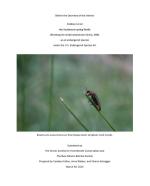
The Xerces Society submitted this petition for listing the Southwest spring firefly (Bicellonycha wickershamorum) under the Endangered Species Act (ESA) in 2023.
The Florida intertidal firefly, also known by the common names mangrove firefly and fiddler crab firefly, is a habitat specialist found only in the mangroves and salt marshes of coastal Florida and the Bahamas. Belonging to a tropical branch of the firefly family tree, this species is the only member of its genus in the United States.
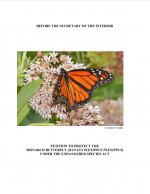
The monarch was petitioned for listing under the Endangered Species Act in 2014 through a petition submitted by the Xerces Society and our conservation partners, including Center for Biological Diversity, Center for Food Safety, and the late Dr. Lincoln Brower.
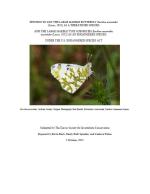
The Xerces Society submitted this petition for listing the large marble butterfly (Euchloe ausonides) under the Endangered Species Act (ESA) in 2023.
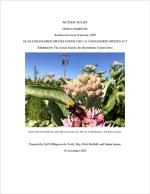
The Xerces Society submitted this petition for listing the Morrison bumble bee (Bombus morrisoni) under the Endangered Species Act (ESA) in 2023.
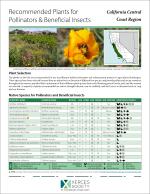
for Pollinators and Beneficial Insects
The plants on this list are recommended for use in pollinator habitat restoration and enhancement projects in agricultural landscapes in the California Central Coast Region.
Pollinators are essential to the health of our environment and for bountiful farm crops. There are four straightforward steps that you can take to help them: grow flowers, provide nest sites, avoid pesticides, and share the word.
"Rapid butterfly declines across the United States during the 21st century" is a study published in Science. The study found that populations of butterflies across the United States are declining. In addition to dramatic declines for individual species, the study concluded that total abundance of butterflies has declined by 22% from 2000 to 2020. That means that for every five butterflies seen 20 years ago, now there are only four.
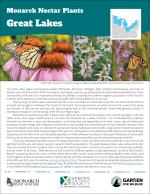
This regional list of monarch nectar plants is geared toward gardeners, landscape designers, and land managers who are implementing small- to large-scale monarch restoration projects in eastern Minnesota, Wisconsin, Michigan, Ohio, northern Pennsylvania, and most of western and central New York.
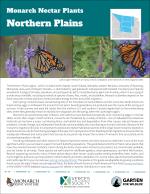
This regional list of monarch nectar plants is geared toward gardeners, landscape designers, and land managers who are implementing small- to large-scale monarch restoration projects in North Dakota, South Dakota, Nebraska, eastern Montana, and parts of Wyoming, Minnesota, Iowa, and northeast Colorado.


