
As a science-based organization, the Xerces Society produces dozens of publications annually, all of which employ the best available research to guide effective conservation efforts. Our publications range from guidelines for land managers, to brochures offering overviews of key concepts related to invertebrate conservation, from books about supporting pollinators in farmland, to region-specific plant lists. We hope that whatever you are seeking—whether it's guidance on making a home or community garden pollinator-friendly, advice on developing a local pesticide reduction strategy, or detailed information on restoring habitat—you will find it here!
Find Publications
Use the search functions to sort by publication type (books, guidelines, fact sheets, etc.), location, and/or subject (agriculture, gardens, pollinators, pesticides, etc.).
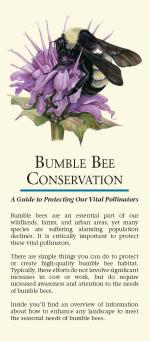
A Guide to Protecting Our Vital Pollinators
Bumble bees are an essential part of our wildlands, farms, and urban areas, yet many species are suffering alarming population declines. It is critically important to protect these vital pollinators.
There are simple things you can do to protect or create high-quality bumble bee habitat. Typically, these efforts do not involve significant increases in cost or work, but do require increased awareness and attention to the needs of bumble bees.
This brochure offers an overview of information about how to enhance any landscape to meet the seasonal needs of bumble bees.
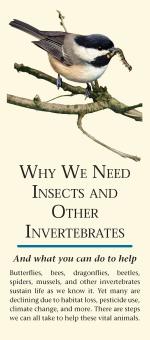
And what you can do to help
Butterflies, bees, dragonflies, beetles, spiders, mussels, and other invertebrates sustain life as we know it. Yet many are declining due to habitat loss, pesticide use, climate change, and more. This brochure shows how we depend on invertebrates, introduces the major threats facing them, and lists some steps we can all take. No action is too small to help these tiny but vital animals.
For Pollinators & Other Beneficial Insects
The availability of nesting and overwintering habitat is one of the most important factors influencing populations of native bees and other beneficial insects. This guide focuses on a variety of natural nesting habitat features that can be readily incorporated into most landscapes to benefit pollinators and beneficial insects.
Mulch can be any material intentionally placed on the soil surface that aids in weed suppression, erosion control, and moisture retention, and it can be very helpful in establishing small-scale wildflower plantings with plugs for pollinators and beneficial invertebrates. Mulching can be used both before planting to help prepare the site by smothering existing vegetation and after planting to help suppress weed pressure and retain moisture. It also sends the message that this site is cared for, that these small plants will become something significant.

How to increase native bee pollination on your farm in several simple steps (for Pennsylvania and New Jersey Farmers)
In this pamphlet, you can find out…
- The most effective native bees in PA and NJ and how to identify them
- Their habitat and foraging needs
- Strategies for encouraging their presence on your farm
- Sources of funding
Produced by Bryn Mawr College and Rutgers University
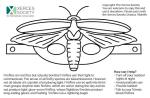
Cut, color, and wear this fun mask to shimmer like a dragonfly! This is an educational craft activity for kids.
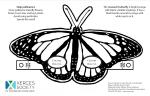
Cut, color, and wear this fun mask to flutter like a butterfly! This butterfly is modeled after the beloved North American monarch butterfly (Danaus plexippus). This is an educational craft activity for kids.
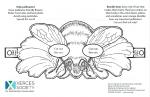
Cut, color, and wear this fun mask to buzz like a bumble bee! This is an educational craft activity for kids.
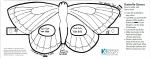
Cut, color, and wear this fun mask to flutter like a butterfly! This butterfly is modeled after the Xerces blue butterfly (Glaucopsyche xerces), which is the Xerces Society's namesake. This is an educational craft activity for kids.
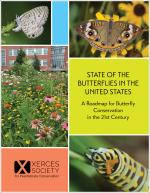
A Roadmap for Butterfly Conservation in the 21st Century
A study published in March 2025 showed that we are losing butterflies at a rate of 1.3% per year in the contiguous US. State of the Butterflies in the United States presents a summary of those findings, species-level information on population trends for each of seven regions, and most importantly, a roadmap for how we can recover butterflies in the places we live, work, and play.


