
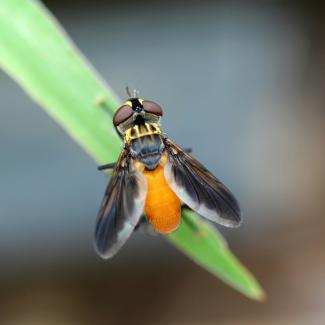
For the Love of Flies: The Unsung Heroes of the Insect World
46 MinutesGuests: Dr. Erica McAlister
Flies are amazing insects that play critical roles in our environment, including pollination, waste disposal, pest control, and as a link in the food web. Flies are greatly diverse in colors, shape, size, and where they live. Butterflies and bees probably generate more enthusiasm, but it’s time to change that.
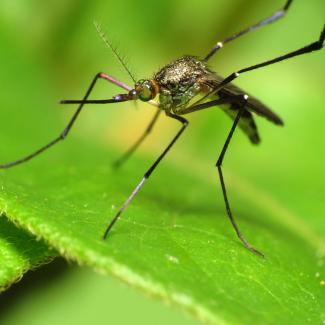
Plastic Bands, Pesticides, and Deadly Drift: A Study on Mosquito Spray
40 MinutesGuests: Aaron Anderson
Who doesn’t know the high-pitched whine of a nearby mosquito? We know they can be a nuisance, and in many regions, a health risk because of their ability to spread diseases. Some communities do public control campaigns, and increasingly, companies are offering home spraying of yards. But, the insecticides used in these sprays are broadly toxic to insects, and the risk they pose to pollinators isn't fully understood. In the summer of 2023, Xerces did a study looking at how these insecticides spread across the landscape.
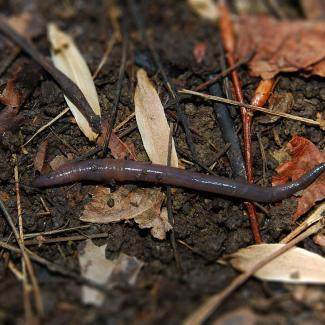
The Underground Heroes: Earthworms
49 MinutesGuests: Jennifer Hopwood, Stephanie Frischie
Earthworms. They may elicit memories of digging through the dirt, probably as a child, and picking them up to discover what they are. But what do they do other than slink around and bury themselves in the soil?
Social and Emotional Learning: Making Science Accessible
40 MinutesGuests: Gwen Pearson
More than ever, communicating scientific information effectively is critical to conservation efforts. But how exactly do we do that?
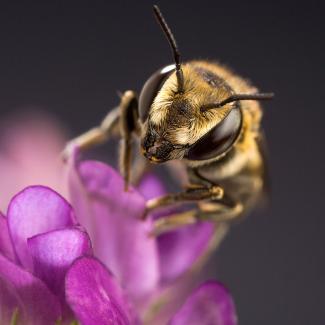
Protecting Bees from Pesticides: Why EPA Regulations Need to Change
43 MinutesGuests: Aimée Code, Sharmeen Morrison
The United States Environmental Protection Agency, also known as the EPA, is tasked with regulating pesticides to protect people and the environment from their impacts. To test these impacts, the EPA uses honey bees. This might seem reasonable, but the honey bee is not native to North America and its social colony structure is unique and not representative of the thousands of native species of bees in the United States. The reliance on the honey bee for testing has profound implications for the safety of our native bees and other pollinators, given their vastly different life histories.
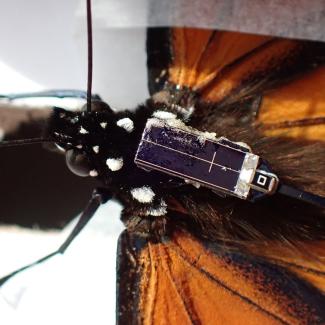
Monarch Conservation: Tracking Migration with Rice-Sized Technology
41 MinutesGuests: Ashley Fisher
The monarch butterfly is popular and currently in the news a lot. You might think that we know all there is to know about it, but there are many mysteries remaining, particularly about their migration and how they use their habitat. This may be more so for the western population that overwinters in California. Radio tracking has long been used for studying the movement and habitat use of bigger animals. Advances in this technology mean it is emerging as a tool that can provide scientists with some answers about tiny animals too.
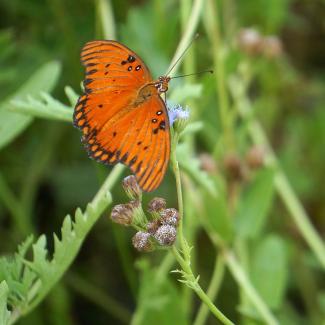
Insects in the Balance: Why Monitoring Matters
43 MinutesGuests: Matt Forister
Bees, butterflies, beetles — populations of almost any group of insects you can name seem to be falling. But how do we know they are falling, how can we find out how well insects are doing? Monitoring is an essential tool for understanding the abundance and distribution of species, as well as how they respond to conservation efforts.
The Power of Policy: Insect Protection Through State Authority
36 MinutesGuests: Rosemary Malfi, Kevin Burls
In one of our first episodes we spoke with Sarina Jepsen, the director of our endangered species team, about what it means for a species to be federally listed, specifically through the Endangered Species Act. However, species can also be listed through individual states, but not all states are the same, and some states don’t have legislation to protect insects. It is an interesting story!
The Secret Lives of San Diego Zoo Insects
43 MinutesGuests: Paige Howorth
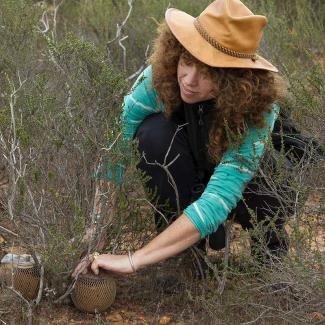
Many of us likely have childhood memories of a zoo visit: gibbons swinging above us, lions pacing, a polar bear taking a plunge. Zoos also can play an important role in conservation, particularly for insects. One example is the work done at the San Diego Zoo to help invertebrates by solving mysteries about their habitat and life cycle needs, and in some cases bringing back species on the brink of extinction.
Buzzing Together: The Bumble Bee Atlas and the Power of Community Science
32 MinutesGuests: Amy Dolan, Michelle Toshack
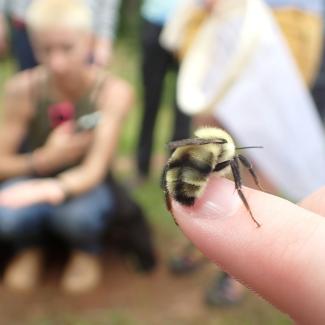
Community science is critical to conservation efforts and the Bumble Bee Atlas is no exception. Volunteers across the country have contributed to the Atlas program through bumble bee surveys, providing crucial information on bumble bee abundance and distribution. This information informs conservation efforts and makes a real difference.