
As a science-based organization, the Xerces Society produces dozens of publications annually, all of which employ the best available research to guide effective conservation efforts. Our publications range from guidelines for land managers, to brochures offering overviews of key concepts related to invertebrate conservation, from books about supporting pollinators in farmland, to region-specific plant lists. We hope that whatever you are seeking—whether it's guidance on making a home or community garden pollinator-friendly, advice on developing a local pesticide reduction strategy, or detailed information on restoring habitat—you will find it here!
Find Publications
Use the search functions to sort by publication type (books, guidelines, fact sheets, etc.), location, and/or subject (agriculture, gardens, pollinators, pesticides, etc.).
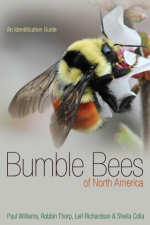
An Identification Guide
A landmark publication, Bumble Bees of North America sets the standard for guides and the study of these important insects.
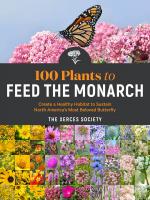
Create a Healthy Habitat to Sustain America’s Most Beloved Butterfly
100 Plants to Feed the Bees provides at-a-glance profiles of plants that provide monarchs with nourishment. The listed plants are all commercially available, and range from milkweeds to flowering plants, shrubs, and trees that provide nectar for the adult butterfly, including those that sustain monarchs in their great migration.
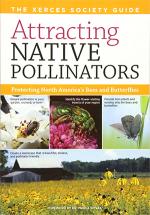
Protecting North America’s Bees and Butterflies
Attracting Native Pollinators is Illustrated with hundreds of color photographs and dozens of specially created illustrations across four sections: pollinators and pollination, taking action, bees of North America, and creating a pollinator-friendly landscape. Read it for your own enjoyment or use it as a teaching guide to inform others.
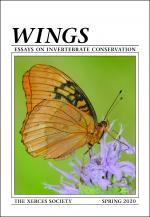
Essays on Invertebrate Conservation
The importance of tackling climate as part of an invertebrate-conservation agenda is underscored by modeling studies that show the impact of climate change on the small creatures that sustain us. Depending on the amount of warming, as much as 49 percent of invertebrates may disappear from half of their current ranges.
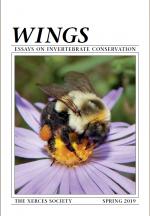
Essays on Invertebrate Conservation
In a time of growing environmental threats, what we do in our home towns and neighborhoods is increasingly important.
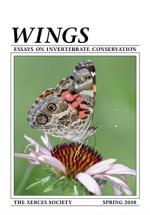
Essays on Invertebrate Conservation
Grasslands are among the most threatened habitats; easy to build upon or plow up, they are often the first to go. This issue of Wings looks at the beautiful wildlife that grasslands support, and some of the management problems faced by conservationists.
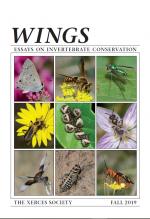
Essays on Invertebrate Conservation
“Protecting the life that sustains us” is not just a tagline for the Xerces Society; it is the principle that guides us every day. We hope that the articles in this issue of Wings will help to explain why this is important and illustrate some of the diverse ways in which we work to embody this principle. Thank you for your support of our work.
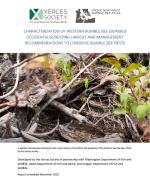
As populations of a variety of bumble bee species, including the western bumble bee (Bombus occidentalis), become increasingly rare, protecting and expanding high-quality habitat is essential. In addition to flowering plants on which to forage, bumble bees require nesting and overwintering habitat. While a substantial amount is known about what constitutes high quality foraging habitat, much less is known about where the western bumble bee overwinters and nests.
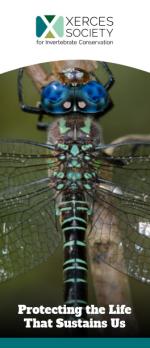
This brochure introduces the Xerces Society for Invertebrate Conservation and explains what we do and why.
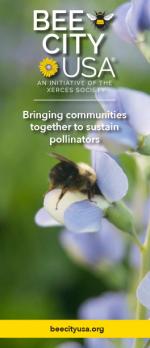
Bringing Communities Together to Sustain Pollinators
Bee City USA brings communities together to sustain pollinators by increasing the abundance of native plants, providing nest sites, and reducing the use of pesticides. Affiliates of Bee City USA also work to inspire others to take steps to conserve pollinators through education and outreach. Learn how your community can join Bee City USA.


