
As a science-based organization, the Xerces Society produces dozens of publications annually, all of which employ the best available research to guide effective conservation efforts. Our publications range from guidelines for land managers, to brochures offering overviews of key concepts related to invertebrate conservation, from books about supporting pollinators in farmland, to region-specific plant lists. We hope that whatever you are seeking—whether it's guidance on making a home or community garden pollinator-friendly, advice on developing a local pesticide reduction strategy, or detailed information on restoring habitat—you will find it here!
Find Publications
Use the search functions to sort by publication type (books, guidelines, fact sheets, etc.), location, and/or subject (agriculture, gardens, pollinators, pesticides, etc.).
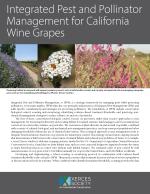
Integrated Pest and Pollinator Management, or IPPM, is a strategic framework for managing pests while protecting pollinators. As its name implies, IPPM takes the core principles and practices of Integrated Pest Management (IPM) and adds specific considerations and strategies for protecting pollinators. The foundations of IPPM include conservation biological control, scouting and monitoring, identifying evidence-based treatment thresholds, and practicing non-chemical management strategies to reduce reliance on and use of pesticides.
Case Study Tech Note
This case study presents a summary of a three-year project to increase the commercial supply of native plant materials for western monarchs, specifically early-emerging milkweeds and late-season nectar plants of San Joaquin Valley ecotypes.
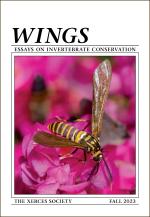
Essays on Invertebrate Conservation
Moths are all around us. They share our natural areas and gardens, and sometimes they share our food crops, and even our clothes. Love them or despise them, moths play profoundly important roles in our environment—as pollinators; as food for songbirds, bats, and other wildlife; as part of the clean-up crew that recycles organic waste; and more—and they deserve our conservation attention.
This fact sheet provides detailed information on hybrid sunflower crop pollinators, including a list of the most important native bees that visit this crop, and steps that can be taken to protect or enhance habitat for these pollinators. The information provided is based on field research conducted by Dr. Claire Kremen (University of California, Berkeley), Dr. Neal Williams and Nikki Nicola.
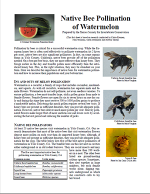
This fact sheet provides detailed information on watermelon crop pollinators, including a list of the most important native bees that visit this crop, and steps that can be taken to protect or enhance habitat for these pollinators. The information provided is based on field research conducted by Dr. Claire Kremen (University of California, Berkeley), Dr. Neal Williams and Nikki Nicola.
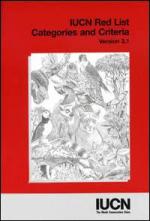
The threatened species categories used in Red Data Books and Red Lists have been in place for almost 30 years. The IUCN Red List Categories and Criteria provide an easily and widely understood system for classifying species at high risk of global extinction, so as to focus attention on conservation measures designed to protect them. This latest version of the classification system was adopted by the IUCN Council in February 2001 and reflects comments from the IUCN and SSC memberships and the final meeting of the Criteria Review Working Group.
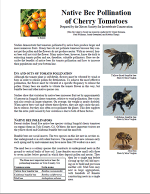
This fact sheet provides detailed information on cherry tomato crop pollinators, including a list of the most important native bees that visit this crop, and steps that can be taken to protect or enhance habitat for these pollinators. The information provided is based on field research conducted by Dr. Claire Kremen (University of California, Berkeley), Dr. Neal Williams and Nikki Nicola.
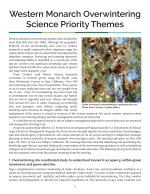
A group of forty key researchers, land managers, state and federal agency representatives, and conservationists for an in-person meeting in May 2023 for collaborative strategic planning of shared priorities of western monarch overwintering science. This fact sheet summarizes the priority themes and key questions that arose from the meeting.
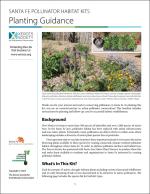
This handout includes instructions for planting and follow-up care for successful habitat establishment of the 2023 Santa Fe pollinator habitat kits.
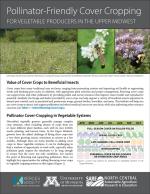
for Vegetable Producers in the Upper Midwest
Cover crops have many traditional uses on farms, ranging from preventing erosion and improving soil health to suppressing weeds and breaking pest cycles. This bulletin will help farmers and managers use cover crops to attract and support pollinators and other beneficial insects on vegetable farms in the Upper Midwest, while also addressing other resource concerns.


