
As a science-based organization, the Xerces Society produces dozens of publications annually, all of which employ the best available research to guide effective conservation efforts. Our publications range from guidelines for land managers, to brochures offering overviews of key concepts related to invertebrate conservation, from books about supporting pollinators in farmland, to region-specific plant lists. We hope that whatever you are seeking—whether it's guidance on making a home or community garden pollinator-friendly, advice on developing a local pesticide reduction strategy, or detailed information on restoring habitat—you will find it here!
Find Publications
Use the search functions to sort by publication type (books, guidelines, fact sheets, etc.), location, and/or subject (agriculture, gardens, pollinators, pesticides, etc.).
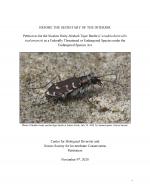
The Center for Biological Diversity and the Xerces Society for Invertebrate Conservation filed a petition seeking Endangered Species Act protection for the imperiled Siuslaw hairy-necked tiger beetle.
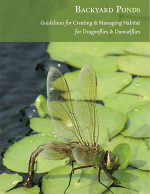
Guidelines for Creating & Managing Habitat for Dragonflies and Damselflies
These guidelines provide information for homeowners and other landowners about the creation, management, and maintenance of backyard ponds to attract native wildlife, with an emphasis on attracting dragonflies and damselflies. By creating aquatic resources for dragonflies and damselflies in their own backyards, homeowners will be rewarded by views of visiting wildlife and will realize the ecological benefits of creating essential aquatic habitat that may be lacking or degraded in many urban landscapes.
The Xerces Society joined a group of environmental and health organizations to petition the California Department of Pesticide Regulation to regulate the planting of crop seeds coated with systemic insecticides. California's pesticide regulatory system has a loophole that allows for unchecked use of insecticide-coated seed on farms throughout the state. Neonicotinoid insecticides are commonly used as seed coatings, resulting in significant contamination of California's waterways and ecosystems as they move off-field.
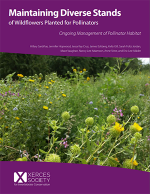
Ongoing Management of Pollinator Habitat
High quality pollinator meadows sometimes experience a decline in wildflower diversity or abundance as they age. This guide provides recommendations on how to bring declining meadows back into a high quality condition.
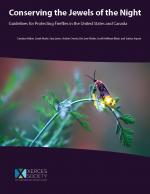
Guidelines for Protecting Fireflies in the United States and Canada
Fireflies are some of our most celebrated insects. They have immense cultural, biological, and economic importance and are important components of natural ecosystems. Their public appeal also makes them ideal flagship species for conservation. They are found all over the world, on every continent except Antarctica, living in temperate and tropical areas. More than two thousand species have been described, with nearly 170 in the United States and Canada.

How Dicamba Herbicides are Harming Cultivated and Wild Landscapes
More than five million acres of crops, an area roughly the size of New Jersey, have been injured by the herbicide dicamba since the U.S. EPA conditionally registered three new formulations for in-crop applications in dicamba-resistant soybeans and cotton in 2016. Damage from this highly mobile herbicide does not stop at the field edge: dicamba drift places tens of millions of acres of wild and ornamental plants—and the wildlife these plants support—at risk.
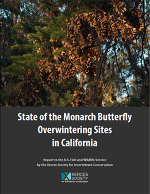
This report provides an assessment of overwintering sites of western populations of the monarch butterfly in California. From data collected at over 400 sites, the report summarizes existing overwintering trends and identifies the highest priority sites for active management and protection.
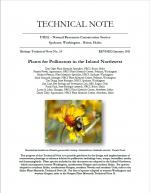
This NRCS Technical Note provides guidance for the design and implementation of conservation plantings to enhance habitat for pollinators. Plant species included in this document are adapted to the Inland Northwest; encompassing eastern Washington, northeastern Oregon and northern Idaho.
Thank you for your interest in partnering with Xerces to protect the life that sustains us! We value the role that businesses of all sizes can play in helping us realize our mission and goals. By becoming a business partner, your company can express support for invertebrates and the ecological roles they provide—and let your customers know that you’re stepping up to protect these animals.
After reviewing this information, please contact us with your partnership idea through our Corporate Support Inquiry Form or by email at businessgiving@xerces.org.
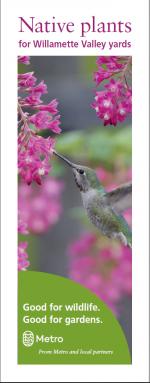
Planting well-chosen natives can create wildlife habitat, conserve water and reduce the need for pesticides and fertilizers that can pollute local rivers and streams. Using native plants in the landscape also brings the beauty of our region’s natural areas closer to home.


