
As a science-based organization, the Xerces Society produces dozens of publications annually, all of which employ the best available research to guide effective conservation efforts. Our publications range from guidelines for land managers, to brochures offering overviews of key concepts related to invertebrate conservation, from books about supporting pollinators in farmland, to region-specific plant lists. We hope that whatever you are seeking—whether it's guidance on making a home or community garden pollinator-friendly, advice on developing a local pesticide reduction strategy, or detailed information on restoring habitat—you will find it here!
Find Publications
Use the search functions to sort by publication type (books, guidelines, fact sheets, etc.), location, and/or subject (agriculture, gardens, pollinators, pesticides, etc.).
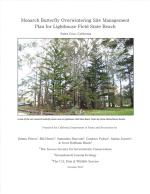
The Xerces Society for Invertebrate Conservation, Groundswell Coastal Ecology, California Department of Parks and Recreation, and the U.S. Fish and Wildlife Service have developed a western monarch butterfly overwintering site management plan that also serves as a template for land managers at other overwintering sites.
Based on the best available data for when and where monarchs breed in the West, we have developed regionally appropriate monarch breeding habitat management windows, when management activities are least likely to have negative effects on monarchs.

Restoring monarch habitat, including roadsides, is important to the species’ recovery. A diversity of milkweed species is found on roadsides, on which readily monarchs lay their eggs, but roadsides provide more than just milkweed. They can also provide diverse nectar sources to feed adult monarchs and other pollinators. This guide highlights best management practices to reduce the impacts of herbicides on monarchs.
In California, climate change is expected to cause higher temperatures, more frequent and longer heat waves, and increased drought frequency and severity. Extreme weather events will also become more common. These challenges posed by climate change are extensive, but there ways you can increase climate resilience for pollinators in your yard, neighborhood park, or whole community.
You can take several actions to alleviate the effects of climate change on pollinators. This fact sheet provides an overview of strategies to reduce the impacts of drought, increased temperatures, and frequent heat waves in agricultural lands. Although this fact sheet is centered on California, many lessons are more broadly applicable, and can provide a useful jumping-off point for climate-smart habitat planning for other regions.
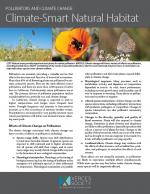
Given the many ways that climate change is likely to impact pollinators and plant-pollinator interactions, we propose multiple strategies to increase climate resilience for pollinators in natural areas. Although this fact sheet is centered on California, many lessons are more broadly applicable, and can provide a useful jumping-off point for climate-smart habitat planning for other regions.
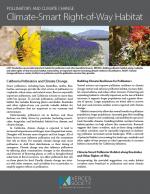
Improving pollinator habitat along roadsides and rights-of-way has many benefits, even beyond providing habitat for these important insects—including carbon sequestration and soil stabilization. Although this fact sheet is centered on California, many lessons are more broadly applicable, and can provide a useful jumping-off point for climate-smart habitat planning for other regions.
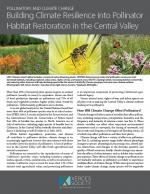
While habitat degradation, pesticides, and disease all contribute to pollinator decline, climate change is an increasingly significant stressor that may interact with these to further drive the decline of pollinators. A loss of pollinators in the Central Valley will affect both agricultural and natural ecosystems. Farms, natural areas, rights-of-way, and urban spaces can all play a role in making the Central Valley a climate-resilient landscape for pollinators.
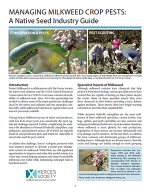
A Native Seed Industry Guide
Increasing the availability of milkweeds is critical to monarch conservation, but seed production can be difficult. While monarchs are the most well-known milkweed specialists, other specialist milkweed-feeding insects can cause damage to valuable milkweed crops. Our guide provides management strategies for dealing with common milkweed pests including aphids, milkweed bugs, and milkweed beetles.
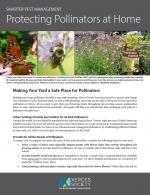
Most of North America’s native bee species only forage over a distance of a few hundred yards, so with a little planning, your yard can provide a safe space for bees and other pollinators to thrive.


